








The Roaring Twenties: Fashion's Great Liberation & How to wear it now
Similar to the 1940s, 1920s fashion was the result of post war societal change. Arguably this period saw the biggest changes than any other - especially in terms of the role of women post WW1. Certainly the clothes reflected that - when women began to abandon the corset and restrictive clothing in favour of more comfortable, simplistic and practical garments.
Looking at the history of fashion, even though the evolution of this style is easily tracked - it is still the most drastic. A complete contrast to the matronly lines of the Edwardian Gibson girl, 1920s fashion heralds the start of the modern era as we know it, when clothing became a tool of self-expression for more than just the wealthy. When there were several cultural movements in all of the main cities in the west - ie. the decadent 'bright young things' in London Society or the New Orleans jazz movement.


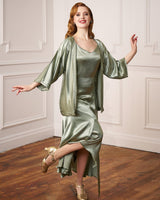
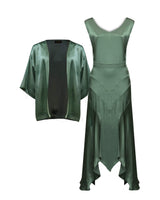
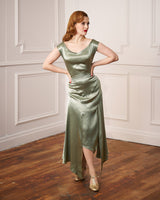
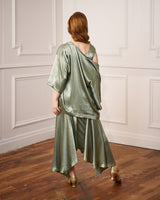
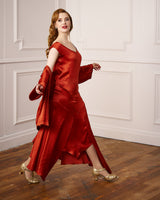
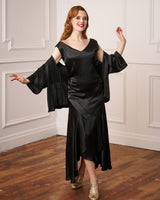
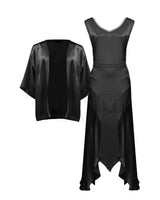
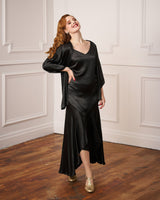


Post-War Liberation & the Jazz Age
There is no two ways about it - the early part of the 20th Century was pretty grim for most - The First World War & the horrendous outbreak of Spanish Influenza were hugely significant events that we still feel the impact of today. Let's not also forget that some women were given the vote in 1919.
There was, however, a brief period of prosperity between WW1 and the crash of 1929 - this is what we now call the 'roaring 20s'.
Socio-economic changes can be tracked through changes in fashion and style. With the roaring 20s - the wind of change was in the air.... social structures were challenged, industry was changing and consquently this was reflected in clothing & fashion. Let's also mention the arrival of the silent movie star and the music from New Orleans - ie. the jazz age.
In the 1920s, Women had more freedom than their mothers did since they had tasted the freedoms of a world beyond homemaking that the war had offered and this was reflected in their simpler and more comfortable clothing. No curves, higher hemlines, a flat silhouette and an emphasis on youth. But it was more than cloche hats and drop waists - it was an explosion of change and experimentation.
The 1920s Silhouette & The Boyish Look
At the start of the 1920s - the fashionable womens silhouette was no shape at all and in stark contrast to the extreme lines of the edwardian matronly 'S shape' era. However, a popular misconception is that the 1920s shape is about being thin - this is not true. It was about being healthy and athletic with a focus on the 'slender mode of youth' - how else would dance and play sports? The look was andogynous and further emphasised by the short bobbed hair. This fashion revolution was all about contrast to the demands of previous fashions and a seeking of equality between the genders.
The waistline in the 20s started loose but where it was expected to be and over the course of the next few years moved downwards to a firm position on the lower hip. By 1925 the look was totally flat, rectangular and hems were to mid calf - the boyish look had arrived.
However, to relieve the monotony of rectangles and simple lines - designers saw these as the perfect blank canvas for adornments, appliques, embroidery, tucks and shirrings. Abstract designs, influenced heavily by the art deco movement, were producing increasingly creative cutting techniques and a-symmetric shapes. Over the next few years, you can easily see an exciting evolution of surprisingly flattering & feminine styles despite the lack of the waist.
Flapper
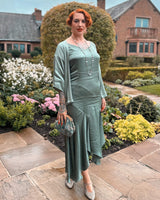
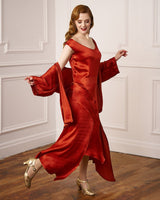
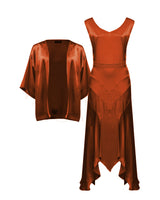
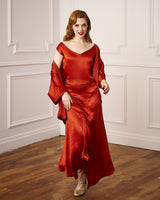
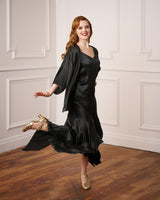
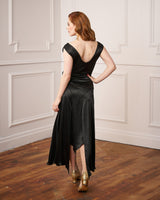
Night-life became the focus and gave birth to the most glamourous evening fashion. The flapper was interested in dancing and being a free spirit and so her dress reflected that. Luxury and exhuberance was the norm and was expressed through the use of sumptuous fabrics such as silk, velvet and satin. With the shape emphasis still placed on the hip - dresses were gathered on the hip or the back, the shoulders and evolved to reflect the frenzy of the jazz age.

Frothy Fabrics & Art Deco Prints
As styles simplified due to the demands of modern life - formal ornamentation and corsetry disappeared in favour of layers, art deco inspired prints and draping, lighter fabrics such as chiffon.
The simple shapes of the 1920s styles screamed for prints and the Art Deco movement gladly provided.

The Cloche
With the demise of the fussy hats and hair of the previous decades, the bob haircut demanded a different hat. As women would still never have left the house without one for a few decades yet....The close fitting helmet like hat was the perfect pairing for the bob and the most iconic symbol of the 1920s.

Varying Hemlengths & A-symmetry
Varying dress lengths is another noticeable feature of this period. Shortened during the war, hem lines descended down to the ankle up until 1923, then rose up to the knee until 1928. During this period, however, designers sough to make their styles more complex to discourage copying by adding godets, flounce panels and complex cutting.

Your 1920s Capsule Wardrobe
Whether you are just after an evening dress for a speakeasy party or really wanting to try out a 1920s influenced image, getting the 20s look doesnt have to be difficult. But a few key garments will go a long way together with thinking differently about shape and adornment. Here are a few staple ideas to get you started:-
- a cloche hat
- mary jane shoes - easy to find and create a great look with coloured opaque tights
- simple drop waist dress (which can then be adorned and styled according to where you are wearing it)
- art deco jewellery - long beads (dare I say it)
- a sumptuous long line coat in velvet or faux fur
Click here to browse our 1920s fashion selection
Further Reading:-
- 1920s Fashion - The Definitive Sourcebook
- Everyday Fashions of the 20s - Sears Catalogue
- Art Deco Fashion - Suzanne Lussier
Style icons from the 1920s:-
- Coco Chanel
- Clara Bow
- Louise Brooks
- Jospehine Brooks
- Colleen Moor
How to Dress 1920s: Our Top Styling Tips
Tip 1 – the foundation
As with all styles, getting the right foundation garments (underwear) is essential. However, for the 20s, we dont need to emphasise the waist. No waspies or waist defining corsets - just smooth lines. Strapping down bosoms isn't necessary either - despite the popular theories....soft and simple underwear with no modern padding is required here.
Tip 2 - accessories
The 1920s era is all about accessories - in the form of a Cloche hat, gloves long and short, jewellery in abundance, a faux fur or two (or a real vintage one).
Tip 3 - hair and hats
1920s hair was mostly bobbed and in some case cropped very close. This is perhaps more tricky with modern hair styles but can be easily adapted via a few clever techniques. We will be doing a 20s video soon.


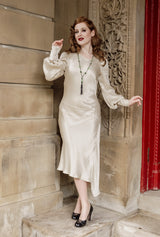


1920s Fashion from Our Blog
